
Key Takeaways
- The ERP and accounting market is highly fragmented across industries, regions, and technologies, making scalable integrations complex and resource-intensive.
- ERP systems use a mix of REST, SOAP, file-based, and direct database integration methods, each requiring different technical expertise.
- Many ERP vendors require formal partnerships, paid sandboxes, and compliance certification before API access is granted.
- Building ERP integrations in-house means investing in vendor relationships, test infrastructure, business logic understanding, and data standardization for every system.
- Maesn goes beyond field mapping by transforming, enriching, and sequencing data based on real-world business logic, adapting to how each ERP actually processes information.
The Challenge of ERP and Accounting Integrations
The ERP market and Accounting market is highly fragmented, with a diverse landscape of solutions varying across industries and regions. This diversity poses significant challenges when integrating with ERP and accounting systems, particularly when aiming for seamless and scalable integrations.
Save month of engineering resources and boost your core product with our unified API for ERP integrations
Software teams looking to build ERP integrations inhouse face the following hurdles:
- Variability in Feature Scopes & Business Logic
- Each system operates with a distinct business logic and feature set. This means that the way invoices, transactions, orders, financial records etc. are processed can differ drastically. Understanding and unifying these differences into a standardized integration model is complex and time-consuming.
- Diverse Technologies & API StandardsERP systems use various technologies and integration methods, including:
- REST APIs – Modern systems using standardized HTTP-based API communication.
- SOAP APIs – Older ERP solutions relying on XML-based communication.
- File-Based Integrations – Systems that depend on CSV, XML, or other structured file uploads.
- Direct Database Access – Some on-premise ERP systems require direct database queries.
- Lengthy Partnering & Approval ProcessesMany ERP and accounting vendors have strict approval procedures before granting API access to ensure high quality standards. This includes:
- Hidden APIs – Some do not publicly document their APIs, requiring direct negotiations with the vendor.
- Onboarding Fees & Costly Sandboxes – Testing environments often come with high costs, slowing down the integration process.
- Compliance & Security Requirements – Some ERPs and Accounting require extensive security checks and certification processes before allowing integrations.
- A Fragmented Market
- Solution adoption varies widely by country, particularly in the SME and mid-market segments. Unlike large enterprises using global ERP providers, many businesses rely on region-specific or industry-specific ERP and accounting solutions, further complicating integration efforts.
- On-Premise & Private Cloud Complexities
- Unlike cloud-native applications, many ERP systems are hosted on private clouds or on-premise servers. Integrating with these requires custom deployments, VPN setups, or on-site installations, adding another layer of complexity.
What It Takes to Build Scalable ERP Integrations
To successfully offer a broad range of ERP integrations, businesses must:
- Engage with ERP Vendors – Establish partnerships, negotiate access to APIs, and understand licensing models.
- Invest in Test Infrastructure – Purchase sandbox environments or dedicated ERP instances for development.
- Learn ERP Business Logic & Data Models – Each ERP system has unique rules for handling financial data, inventory, HR records, and more.
- Standardize Data Transformation – Ensure data consistency across multiple ERP platforms, regardless of their original format or structure.
Why Maesn's Unified API for ERP and Accounting Integration is a Game-Changer
Beyond Simple Field Mapping
Unlike traditional integration solutions and most Unified APIs that only map fields between systems, Maesn's Unified API goes further by transforming, enriching, and sequencing data based on real-world business use cases.
Context-Aware Data Handling
Our API doesn’t just transfer raw data—it understands and adapts based on how each ERP or accounting system processes information. For example:
- Expense Management Integration
- Some ERPs handle expenses through a virtual bank and transactions.
- Others categorize them in a cash ledger.
- Some record them as journal entries.
- Others use a clearance account.
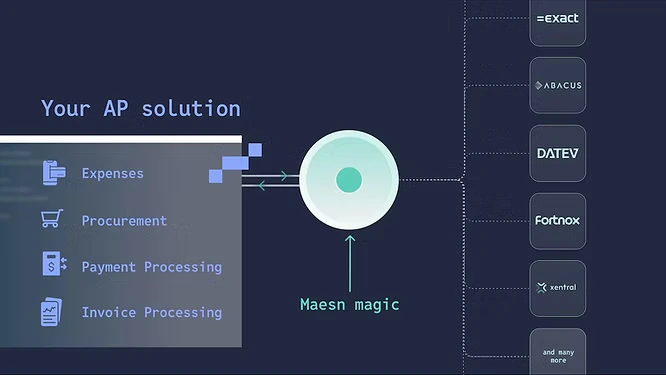
Maesn’s Unified API normalizes these variations, ensuring seamless interoperability across multiple ERP platforms.
Seamless Connectivity Across ERP Solutions
With Maesn’s Unified API, SaaS platforms can:
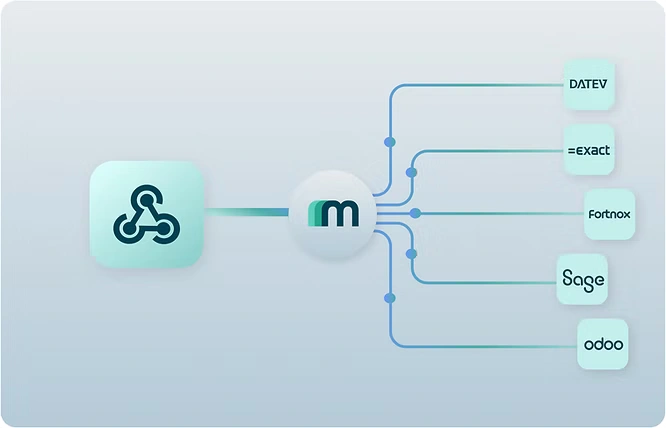
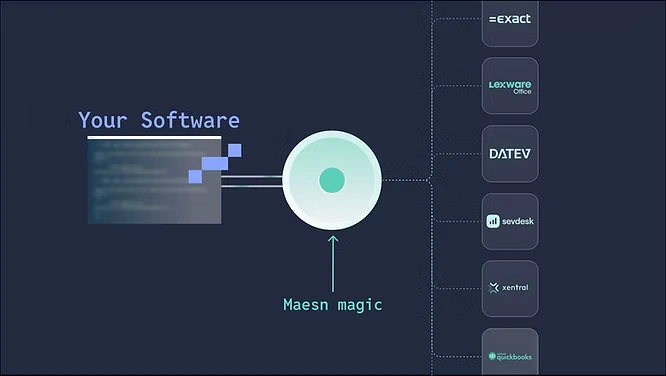
- Reduce Development Effort – A single API for multiple ERP systems eliminates the need for individual integrations.
- Accelerate Time-to-Market – Skip lengthy approval processes with pre-built ERP connectors.
- Improve Data Accuracy & Compliance – Built-in data validation ensures consistency across different systems.
- Lower Maintenance Costs – No need to manage and update multiple custom integrations.
Learn how other winning Software Teams scale their integrations with Maesn - Customer Stories
The Future of ERP Integrations and Accounting Integrations with Unified APIs
As the landscape continues to evolve, businesses must adopt smarter integration strategies to remain competitive. Maesn’s Unified API offers a scalable, efficient, and future-proof approach to ERP and Accounting integrations, helping companies unlock new growth opportunities while reducing integration complexity.
By leveraging our expertise in API interoperability, we empower businesses to connect seamlessly with ERPs, streamline operations, and drive innovation.
About the author
Themo is CEO and Co-Founder of Maesn. With years in strategy consulting — spanning requirements engineering for complex software landscapes, ERP and accounting software selections, and end-to-end integration projects — he holds a Dr.-Ing. with a focus on ERP-to-SaaS transformation. He co-founded Maesn to make system integration effortless.

Co-Founder