
HubSpot integrates to every accounting system its DACH customers run on.
HubSpot is one product used the same way everywhere. The accounting system next to it is not. Instead of building several integrations on its own, HubSpot uses Maesn to connect to all of them, so every customer keeps working in the accounting system it already has.
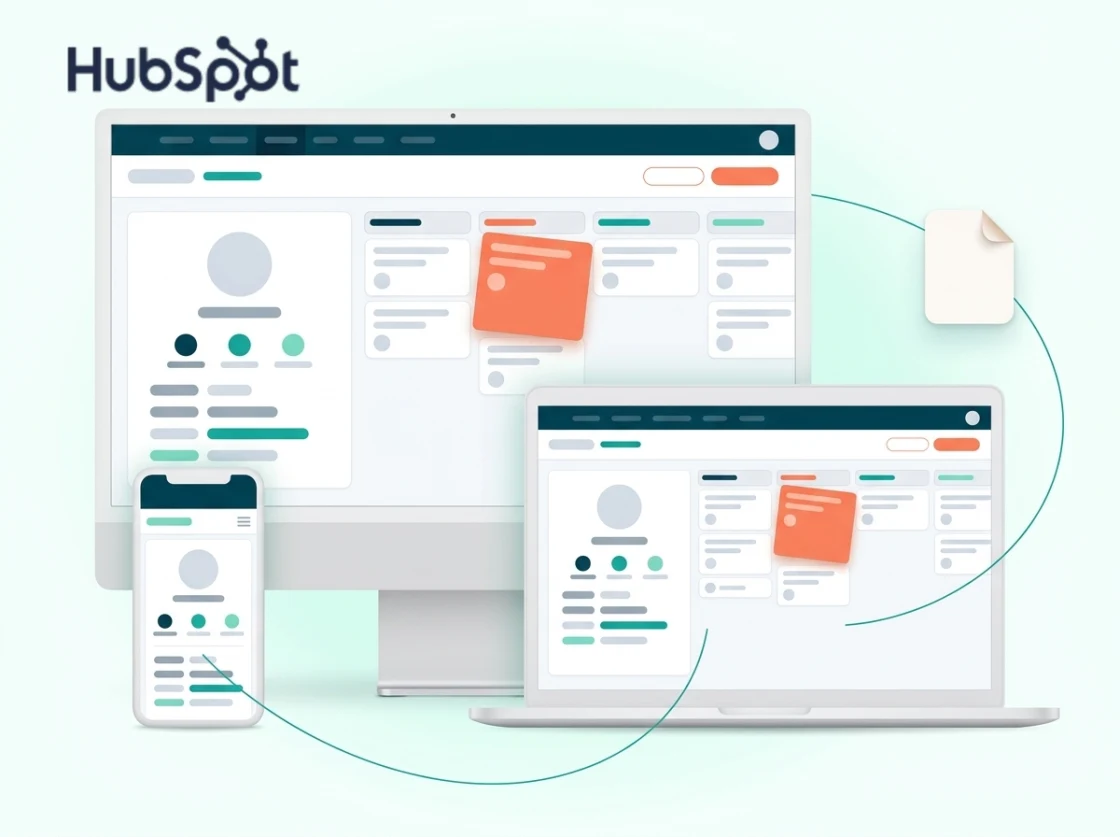













HubSpot integrates the German systems it never had to build
“We integrate German accounting systems and rely on Maesn as a trusted enabler - ensuring seamless data flow, full compliance, stronger partnerships, and efficient, reliable financial processes that support our growth.”


Who HubSpot is, and where Maesn sits
- Website
- hubspot.com
- About HubSpot
- Founded in 2006 by Brian Halligan and Dharmesh Shah, two MIT graduate students who had noticed two years earlier that buyers no longer wanted to be interrupted. HubSpot publishes 299.000 customers, more than 8.800 employees and 15 global offices.
- Use case
- Integrating the CRM with the diverse accounting systems of the DACH region, without creating an individual connection for each tool. Through Maesn, HubSpot syncs client data and invoices. The workflow itself, independent of any one vendor, is on the customer and supplier data sync page.
- Previous solution
- Manual import of data points into the CRM platform.
- Accounting systems
- DATEV, sevdesk and Lexware Office
A market where every business picks its own accounting system
As a global CRM leader, HubSpot faced the complexities of the highly fragmented accounting software landscape in the DACH region. With a multitude of accounting systems and even industry-specific solutions, it was challenging for HubSpot to integrate with each tool.
The time and resources required to develop, maintain and continually update these integrations for every system weren't feasible. HubSpot needed a solution that could offer seamless connectivity for their customers while maintaining operational efficiency.
One integration that keeps data up to date in both systems.
The customer record moves into the accounting system so the invoice can be written correctly, and the invoice moves back into the CRM so the account is complete.
The customer is created on 16 of the 30+ connected systems and the invoice is read back on 13, so both directions run on ten of them. sevdesk and Lexware Office are two of the ten. DATEV Rechnungswesen takes the contact and both DATEV products take a document, and neither reads an invoice back.
Customer data gets transferred for invoicing
HubSpot as the CRM is the leading system for the sales process, so a customer is created in HubSpot first. Once there is a deal, that customer data is needed in the accounting system for billing. Customers are therefore synced to the accounting system once they reach a certain stage in the deal pipeline.
Invoices and final documents sync to HubSpot
Once an invoice or another billing document is created in the accounting system, it is transferred to the deal in HubSpot, so the salesperson is always up to date on where the accounting team stands.
Bi-directional data sync only works if a customer means the same thing on both sides, and it does not: every accounting system names and shapes that record differently, and some of them keep a contact and a customer as separate things. The common data model resolves that before either side sees it, which is why HubSpot writes one shape rather than one per product.
The other half of keeping data fresh is knowing when something changed, because a record that is only correct at import time is the previous solution with extra steps. Unified webhooks is the part that carries that, including for the systems that do not offer an event of their own.
Local accounting systems, without a local integration team
Hundreds of HubSpot's own customers in the DACH region, each on the accounting system it already had, and nobody inside HubSpot who owns those systems.
“Serving hundreds of their customers in the DACH region without building or maintaining a single integration in-house.”
HubSpot had felt what building and maintaining integrations in-house costs: teams of engineers and product managers who turn into experts on third-party software instead of improving their own product.
Common questions
Which accounting systems does HubSpot connect to through Maesn?
When does a customer move into the accounting system?
Which way does the data move?
Are payment reminders part of what moves?
Why did HubSpot not build these integrations itself?
Can another CRM work the same way?
 Reads the ledger through Maesn and keeps the bank side on its own connection, then writes the reconciled bookings back.Read the case study
 Automates the full accounts payable cycle and posts every payment back into the customer's ERP.Read the case study
 Turns tracked project time into draft invoices inside the accounting system the customer already runs.Read the case study