
Key Takeaways
- Businesses face two integration scenarios: standardized best-of-breed setups that need simple plug-and-play connections, and highly customized systems that require complex, bespoke integrations.
- Customization increases complexity, implementation costs, and long-term maintenance burden, driving a broader shift toward software standardization.
- Unified APIs provide a single consistent interface for integrating multiple systems, reducing training requirements, service efforts, and integration complexity for both scenarios.
- Even highly customized systems can be accommodated through authenticated passthrough features, allowing ongoing customization without extensive reconfiguration.
- Unified APIs support the best-of-breed strategy by enabling specialized software solutions to communicate seamlessly without the usual integration headaches.
The evolution of business applications: From customization to standardization
Historically, businesses often faced a dilemma when implementing new software systems: Should they go with a standardized solution that offers broad compatibility but less customization, or should they opt for a more tailored approach that meets their specific needs but requires significant customization?
While customization offers a level of personalization that can be appealing, it often comes at a cost. Customization can lead to increased complexity, higher implementation and maintenance costs, and a greater likelihood of integration issues down the road. As a result, many businesses are now recognizing the benefits of software standardization, where the focus shifts to using unified APIs to create a more streamlined and efficient integration process.
Understanding the customer scenarios
Before diving deeper into the benefits of unified APIs, it’s important to understand the two primary customer scenarios SaaS providers typically encounter:
- Best-of-Breed Strategy Adopters:These businesses prefer using a collection of specialized software solutions, each excelling in its specific area. They tend to be satisfied with standard integrations and primarily require training to get their systems up and running.
- Highly Customized Systems:On the other hand, some businesses have extensively tailored their software systems to meet specific needs. These companies require bespoke integrations, which traditionally involve significant service efforts and complex implementation processes.
The standard integration journey
For businesses adopting the best-of-breed strategy, the integration process is relatively straightforward. Imagine the consumer experience with a smartphone app store: you select an app, authenticate, authorize it to access specific data, and voilà—it's integrated. This kind of plug-and-play integration works well for companies with standardized systems, minimizing the need for extensive customization or third-party intervention.
Tackling the challenges of customized systems
However, for companies with highly customized systems, integration becomes a more complex challenge. Passing the integration process off to third-party service providers or pushing the responsibility back onto the customer may seem like a quick fix, but these approaches often lead to additional complications. Miscommunication, inconsistent implementation, and the need for ongoing maintenance are just a few of the headaches that can arise.
For SaaS providers, finding a way to simplify the integration process for these customers without sacrificing customization or service quality is critical. This is where unified APIs prove invaluable.
Unified APIs: The key to simplified integration
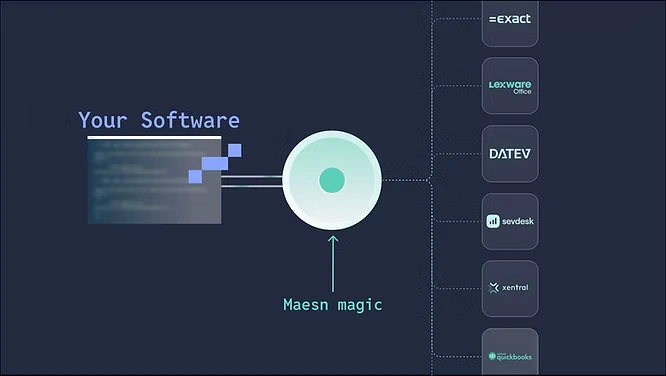
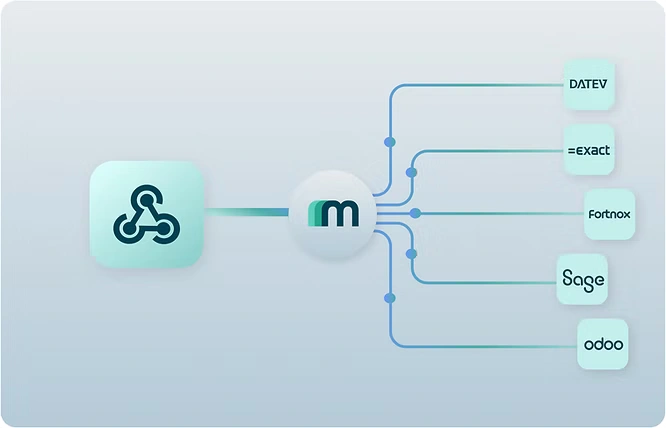
Unified APIs offer a game-changing solution for SaaS providers dealing with both standardized and customized systems. By providing a single, consistent interface for integrating various business applications, unified APIs eliminate many of the challenges associated with traditional integration methods.
Here’s how unified APIs simplify the integration process:
- Reduced need for training on third-party systems:Unified APIs reduce the need for SaaS providers to train their teams on multiple third-party systems. Instead, they can focus on mastering a single API, which simplifies onboarding and reduces the likelihood of errors during integration.
- Streamlined integration process:With unified APIs, the integration process is more predictable and manageable. Rather than dealing with a patchwork of different systems and interfaces, SaaS providers can use a consistent API that handles the heavy lifting of data exchange and system synchronization.
- Minimized service efforts:One of the most significant benefits of unified APIs is the reduction in service efforts required to implement and maintain integrations. Since the unified API provider manages the integration framework, SaaS providers can focus on delivering value to their customers rather than getting bogged down in technical details.
- Adaptability to customization:Even for companies with highly customized systems, unified APIs offer a level of flexibility that traditional integration methods can't match. If new data fields or system changes are introduced, the integration can be updated within the "authenticated space" using an "authenticated passthrough" feature. This allows for ongoing customization without the need for extensive reconfiguration or retraining.
How Unified APIs support software standardization
In addition to simplifying the integration process, unified APIs also support the broader trend towards software standardization. As businesses increasingly recognize the benefits of standardized systems—such as easier maintenance, lower costs, and greater scalability—unified APIs provide a bridge between the old world of highly customized systems and the new world of standardized solutions.
By offering a consistent interface that works across various systems and platforms, unified APIs help businesses transition to a more standardized approach without sacrificing the functionality or customization they need. This makes unified APIs a critical tool for businesses looking to future-proof their operations and stay competitive in a rapidly changing tech landscape.
The future of SaaS integration: Efficiency and standardization
As the SaaS industry continues to evolve, the importance of efficient and standardized integration will only grow. Businesses are increasingly looking for ways to reduce complexity, minimize service efforts, and ensure that their systems work seamlessly together. Unified APIs offer a solution that addresses all of these needs, making them an essential tool for SaaS providers and their customers alike.
For businesses, the adoption of unified APIs means a smoother, more predictable integration process, regardless of whether they’re using standardized or highly customized systems. For SaaS providers, unified APIs represent a way to reduce the complexity and cost of integration, while still delivering the customization and flexibility that customers demand.
CRM providers like HubSpot or debt collection software like paywise have already taken the lead in implementing a unified API strategy.
Unified APIs and the best-of-breed strategy
The best-of-breed strategy, where businesses choose the best software solutions for specific functions rather than a single, comprehensive platform, has become increasingly popular. However, this approach often comes with its own set of integration challenges. Unified APIs make it possible to maintain the advantages of a best-of-breed strategy while mitigating the complexities of system integration.
By providing a standardized interface, unified APIs allow different software applications to communicate seamlessly, regardless of their underlying architecture. This enables businesses to enjoy the benefits of specialized software solutions without the usual headaches associated with integrating multiple systems.
Final Thoughts: Why unified APIs are the future
In conclusion, unified APIs represent a significant advancement in the world of SaaS integration. By simplifying the integration process, reducing the need for extensive customization, and supporting the trend towards software standardization, unified APIs are poised to become an essential tool for businesses of all sizes.
For SaaS providers, the adoption of unified APIs offers a way to deliver more value to customers, reduce service efforts, and stay competitive in a rapidly evolving market. For businesses, unified APIs provide a path to a more streamlined, efficient, and future-proofed IT infrastructure.
In a world where efficiency and standardization are increasingly important, unified APIs aren’t just a nice-to-have—they're a must-have for any business looking to succeed in the digital age.
About the author
Themo is CEO and Co-Founder of Maesn. With years in strategy consulting — spanning requirements engineering for complex software landscapes, ERP and accounting software selections, and end-to-end integration projects — he holds a Dr.-Ing. with a focus on ERP-to-SaaS transformation. He co-founded Maesn to make system integration effortless.

Co-Founder
.webp)