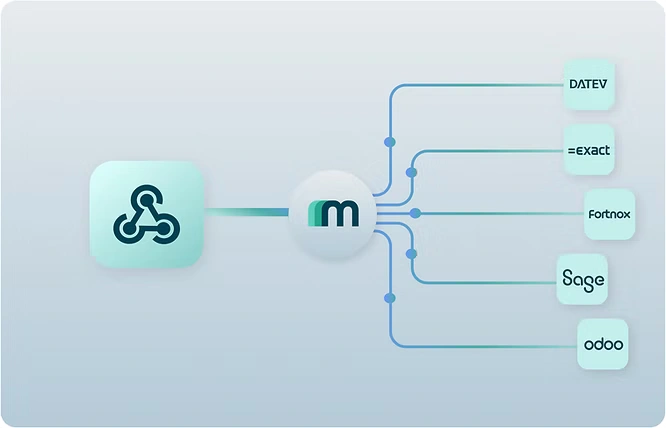
Odoo is an open-source ERP platform used by businesses of all sizes across more than 100 countries. The Accounting module covers invoicing, payments, bank reconciliation, tax reporting and multi-currency. Odoo offers both a cloud-hosted SaaS version and self-hosted deployments.
Integrate odoo alongside dozens of other accounting and ERP systems through Maesn Unified API.
.avif)
















.avif)
















Odoo's native API runs on JSON-RPC — not REST. Maesn abstracts the entire JSON-RPC layer and exposes a standard REST interface so your team never constructs RPC calls, manages endpoint paths or parses Odoo-specific response formats.
Odoo authenticates via session tokens, not API keys or OAuth. Maesn handles the full session lifecycle, login, session storage and re-authentication on expiry, so your integration never breaks on an expired or invalidated session.
Odoo does not offer a public sandbox environment. Maesn can provide access to a shared Odoo sandbox so your team can build and test your integration from day one.

Hero Software helps craft businesses digitize and automate their entire back-office — from quotes to invoicing. Over 40,000 tradespeople use their cloud-based platform to eliminate manual admin and run operations more efficiently.
“The support provided is truly first class, with impressively quick response times. The documentation is thorough and easy to follow, which made integration a smooth process for me. I also appreciate the wide range of accounting integrations and endpoints available. It's clear that the endpoints are continuously being developed and expanded, which adds even more value to the platform.”

Ricardas Kauneckas
Full Stack Engineer @ HERO Software

Unified. Certified. Production-ready.
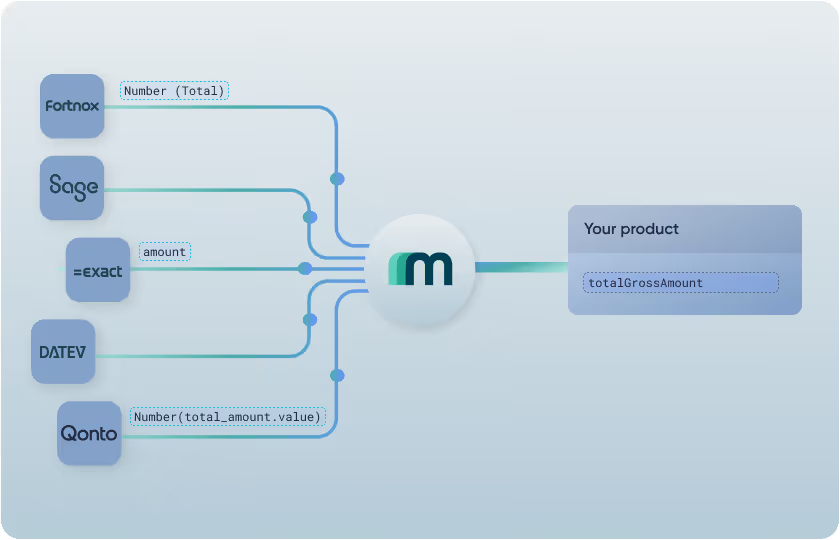
Odoo does not offer a standard REST API. Every request runs through a single RPC endpoint requiring model names, method calls and database credentials in the request body. Maesn abstracts both XML-RPC and JSON-RPC entirely and exposes a clean unified REST interface. No RPC knowledge, no Odoo-specific request construction required.
XML-RPC and JSON-RPC both supported
Standard REST interface exposed by Maesn
No RPC knowledge required on your end
Odoo runs cloud-hosted on Odoo.sh or self-hosted on customer infrastructure — meaning every customer brings a different base URL and a different database name, both of which are required on every request. Maesn collects and stores both per tenant during onboarding and injects them automatically.
Self-hosted and Odoo.sh both supported
Base URL and database name stored per tenant
Identical integration code across all customer deployments
.avif)
.avif)
Odoo authenticates via session tokens rather than API keys or OAuth. Sessions expire and can be invalidated without warning, breaking integrations that don't handle re-authentication. Maesn manages the full session lifecycle: initial login, session storage and automatic re-authentication on expiry, so your integration stays connected at all times.
Session login and storage handled by Maesn
Automatic re-authentication on session expiry
No session management logic required in your code
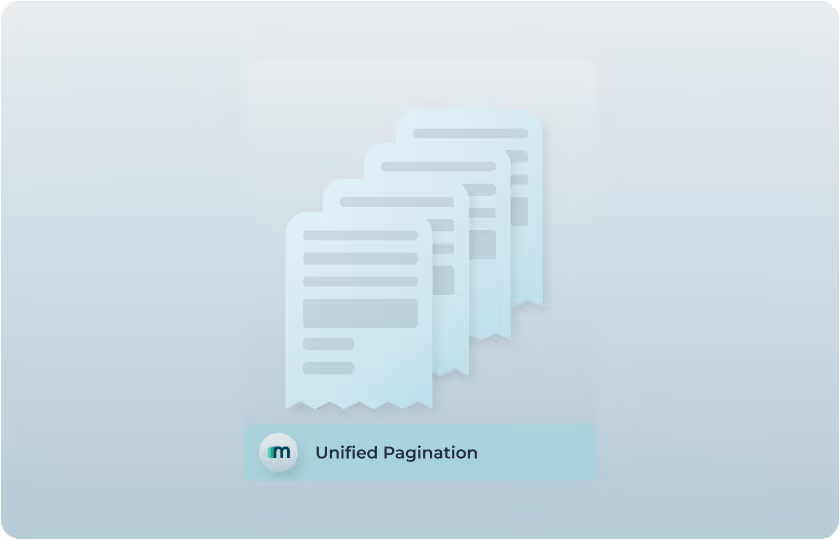
Odoo uses its own limit and offset parameters tied to the RPC method layer rather than standard HTTP pagination. Maesn normalizes this to a unified limit and page model consistent across every system connected through Maesn — no system-specific pagination logic required.
Odoo pagination normalized to unified limit and page
Consistent behavior across all Maesn-connected systems
No system-specific pagination handling required
.avif)
Odoo operates one of the largest ERP app marketplaces globally with millions of users across Community and Enterprise deployments. Listing takes place via a GitHub repository connected to your Odoo account. App pages are ranked on description quality, screenshots and completeness, so presentation directly affects visibility. Maesn supports you through technical preparation and guideline compliance.
Self-service listing via GitHub and Odoo account
App page ranking based on description quality
Preparation and compliance supported by Maesn
The Maesn docs cover every Odoo endpoint, authentication flow and implementation detail, plus a full overview of the current coverage, which is continuously being expanded.
Full Odoo endpoint & authentication documentation
Standard Auth-flow for your users
No custom token storage or grant token management
.avif)
.svg)
Get listed with your app in the Odoo app marketplace - one of the largest ERP ecosystems worldwide.

Get insights and learn about the most imoportant systems in our country-by-country view of the European ERP and Accounting software landscape.
.avif)
Odoo runs entirely on XML-RPC and JSON-RPC. Maesn abstracts both behind a clean REST interface - no RPC knowledge, no model names, no method calls in your request body.
Odoo runs cloud-hosted or self-hosted with a different base URL, database name and version per customer. Maesn handles all of it per tenant so your code stays identical across every deployment.
Once Odoo is live, every other system Maesn supports is immediately accessible.
We are European.
Built and hosted in Germany to meet the highest security and compliance standards, Maesn processes API calls in real time without storing customer data and is fully ISO 27001 & GDPR compliant.
Everything you need to know about Odoo.
You have more questions? We are looking forward hearing from you - book a meeting now!
Odoo is an open-source ERP platform widely used across Europe and globally for accounting, invoicing, inventory, CRM and more. It is available in two editions — Community (free, open-source) and Enterprise (paid, with additional modules) — and can be deployed cloud-hosted on Odoo.sh or self-hosted on customer infrastructure. For software teams, this means every customer brings a different base URL, database name and potentially a different Odoo version depending on when they adopted the platform.
Odoo does not offer a standard REST API. Every request runs through a single RPC endpoint requiring model names, method calls and database credentials in the request body. On top of that, session-based authentication expires without warning, every customer instance has a different base URL and database name, and API behavior varies between annual major versions. Maesn abstracts all of this behind a unified REST interface — so your team builds once and reaches every Odoo deployment without maintaining any of the complexity directly.
Yes. Maesn supports both Odoo RPC protocols and exposes a clean unified REST interface regardless of which protocol the customer's Odoo instance uses. No RPC knowledge or system-specific request construction is required on your end.
Odoo authenticates via session tokens rather than API keys or OAuth. Sessions expire and can be invalidated without warning. Maesn manages the full session lifecycle: initial login, session storage and automatic re-authentication on expiry, so your integration stays connected at all times.
Every Odoo instance, whether cloud-hosted on Odoo.sh or self-hosted, has its own unique base URL and database name, both required on every request. Maesn collects and stores both per tenant during onboarding and injects them automatically. Your integration code stays identical across all customer deployments.
Yes. The Odoo App Marketplace uses a self-service listing process via GitHub and your Odoo account, but app page ranking depends on description quality, screenshots and guideline compliance. Maesn supports you through technical preparation and compliance so your listing goes live without delays.
Maesn uses HTTPS and TLS for all data transfer and does not store any customer data. The platform is hosted on Microsoft Azure in Frankfurt, Germany and is fully GDPR & ISO 27001 compliant.

.webp)