Key Takeaways
- Germany introduced mandatory e-invoicing for B2B transactions, requiring SaaS companies in the DACH region to support XRechnung and ZUGFeRD formats.
- DATEV integration is critical for compliance, as it handles payroll, tax filing, and accounting for a large share of German businesses.
- SaaS platforms must meet DATEV's authentication standards, support real-time data processing, and ensure secure data exchange.
- Companies that fail to offer compliant e-invoicing features risk losing customers to better-prepared competitors and face potential fines or administrative delays.
- Preparation steps include assessing current infrastructure, building a DATEV-ready API, consulting legal and tax experts, and running comprehensive compliance tests.
The business landscape in Germany is set to undergo a significant shift in 2025 with the introduction of mandatory electronic invoicing for B2B transactions. For SaaS companies active in the DACH region (Germany, Austria, Switzerland), this regulation isn't just another hurdle; it’s a call to action, especially when it comes to integrating pivotal bookkeeping tools like Datev.
In addition to the technical API challenges, the new regulation brings with it a host of compliance issues that SaaS providers must address to keep their customers happy and their businesses operating smoothly. But what exactly does this mean, and how can you stay ahead of the curve?
E-invoicing is designed to make invoicing easier and more secure for businesses of all sizes. However, SaaS companies will need to take extra steps to ensure that their platforms support these new formats and communication protocols. Integrating with Datev’s complex API and managing compliance requirements will be a key focus for companies to maintain competitive service in the German market.
API Integration with Datev: The Technical Challenge
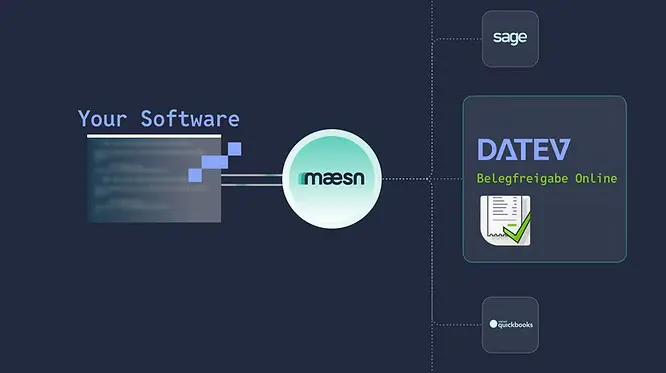
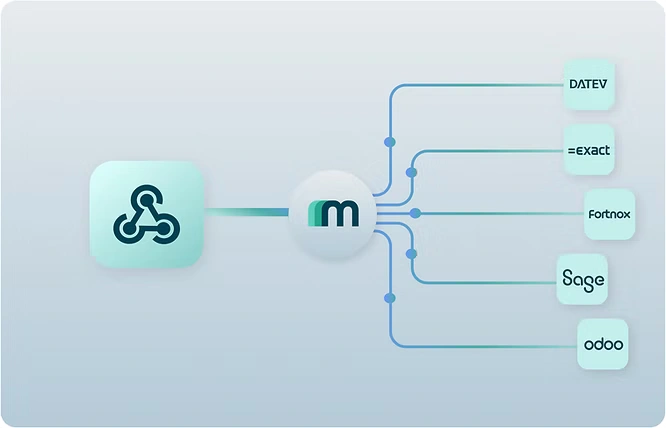
The real heavy lifting for SaaS providers in response to the 2025 e-invoicing mandate will be ensuring seamless integration with Datev. This platform is a linchpin for German businesses, handling everything from payroll to tax filing. For SaaS platforms that offer invoicing, bookkeeping, or accounting services, the need for full compatibility with Datev is critical.
Here’s why API integration with Datev is a big deal:
- Data Formats: You must ensure that your system can export invoices in both XRechnung and ZUGFeRD formats. These are mandatory for B2B transactions and must be understood by Datev for successful processing.
- Authentication and Data Security: Datev has stringent security protocols in place. Your API must meet their authentication standards to guarantee secure and compliant data exchange.
- Real-time Data Processing: Datev operates on real-time data, so your API should be capable of sending, receiving, and processing data quickly and efficiently.
Developing and maintaining a robust API that adheres to Datev’s requirements isn’t just a matter of code—it’s about building trust with your clients by ensuring their financial data is handled properly and their invoices are always compliant.
Key Steps for SaaS Companies to Prepare
Adapting to Germany’s e-invoicing mandate will require a comprehensive approach. Here are the critical steps your SaaS company should take to ensure you’re ready by 2025:
1. Assess Your Current Infrastructure
Take stock of your current invoicing and accounting systems. Do they already support machine-readable formats like XRechnung or ZUGFeRD? If not, you’ll need to make immediate updates to ensure that your platform can generate compliant invoices.
2. Develop a Datev-Ready API
Building or updating your API to fully integrate with Datev is a must. Pay attention to Datev’s specific data formats, security requirements, and real-time processing capabilities. If needed, consult with technical experts familiar with Datev’s infrastructure.
3. Consult with Legal and Tax Experts
Since the e-invoicing rules are tied to tax compliance, it’s important to work closely with legal and accounting professionals. They can help ensure that your platform meets all regulatory requirements, reducing the risk of penalties for non-compliance.
4. Run Comprehensive Tests
Testing is essential to ensure that your system works technically and complies with legal standards. Simulate various invoicing scenarios to check if your API can handle real-world situations without error.
5. Stay Updated with Regulatory Changes
Regulatory requirements may evolve even after 2025. Stay informed about any changes to e-invoicing standards or additional compliance protocols to ensure that your platform remains up to date.
Impact on Companies Using SaaS Solutions
For businesses in the DACH region that rely on SaaS platforms for accounting or invoicing, compliance with the new e-invoicing regulations will be a key expectation. These companies will look to their SaaS providers to offer seamless integration with Datev and other local accounting systems.
Companies that do not comply with the new e-invoicing rules will face penalties, such as fines or administrative delays. More importantly, they risk disrupting their financial operations, as non-compliant invoices will no longer be accepted for B2B transactions.
SaaS companies that fail to offer the necessary compliance features will likely see customers migrate to competitors that are better prepared. Therefore, making sure your platform supports Germany’s e-invoicing standards is crucial for maintaining customer loyalty and expanding your market share in the region.
Wrapping Up
The 2025 e-invoicing mandate in Germany is a major regulatory shift that SaaS companies in the DACH region must prepare for. By ensuring your platform can generate compliant e-invoices and integrate with essential accounting tools like Datev, you can meet regulatory standards and stay ahead in a competitive market.
Don’t wait until the last minute—start preparing your infrastructure and APIs now, and ensure that your platform is ready for the e-invoicing future!
About the author
Themo is CEO and Co-Founder of Maesn. With years in strategy consulting — spanning requirements engineering for complex software landscapes, ERP and accounting software selections, and end-to-end integration projects — he holds a Dr.-Ing. with a focus on ERP-to-SaaS transformation. He co-founded Maesn to make system integration effortless.

Co-Founder