Key Takeaways for bypassing DATEV Belegfreigabe
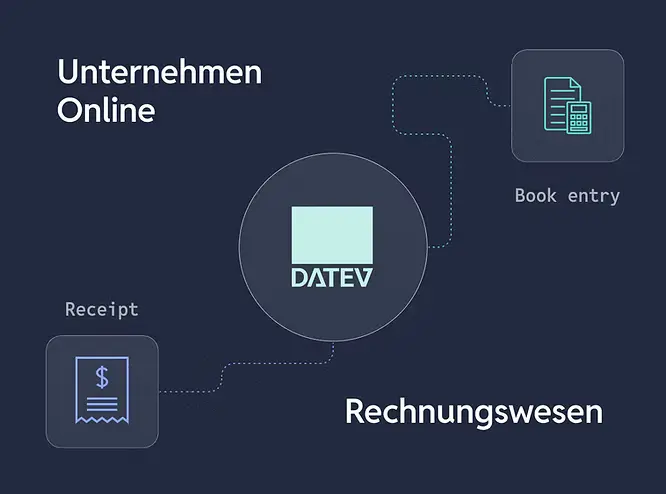
- DATEV Belegfreigabe Online and DATEV Belegfreigabe Online Comfort are two Add-ons to DATEV Unternehmen Online
- Both Add-ons are made to ensure, that bills and invoices are approved before they are further processes within the DATEV environment
- All manually (or via mail) uploaded invoices or bills end up in the pre-defined approval processes
- If invoices or billes are transferred via API they bypass by default the approval process
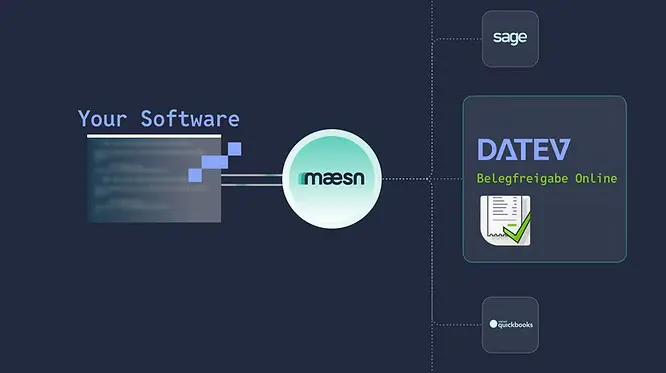
- Maesn Unified API supports files transfer for DATEV Unternehmen Online and ensures that pre-approved bills and invoices bypass DATEV Belegfreigabe
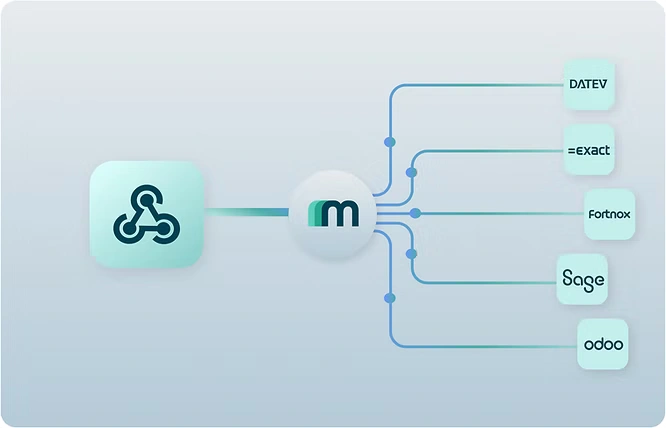
- One integration with Maesn unlocks DATEV API Integration and dozens of other ERP systems via one Unified API
Maesn-based integrations can bypass DATEV Belegfreigabe without disabling it globally
A common assumption is that once Belegfreigabe Online is enabled, it must apply to all documents. In reality, this frequently creates unnecessary friction, as teams end up disabling Belegfreigabe entirely, thereby increasing the risk of manual errors in scenarios where approval workflows would otherwise add value.
Bypassing DATEV Belegfreigabe Online with Maesn Unified API
Using the Maesn Unified API, pre-approved invoices and booking proposals can be transferred to DATEV in a way that bypasses Belegfreigabe Online entirely.
- API-originated data through Maesn follows a controlled, automated processing path
- Manually uploaded documents can still go through Belegfreigabe Online as usual
Nothing is disabled, overridden, or reconfigured globally. The approval workflow remains available exactly where it makes sense.
This creates a clean separation between:
- automated system integrations
- manual accounting workflows
Both can coexist in the same DATEV environment without conflict.
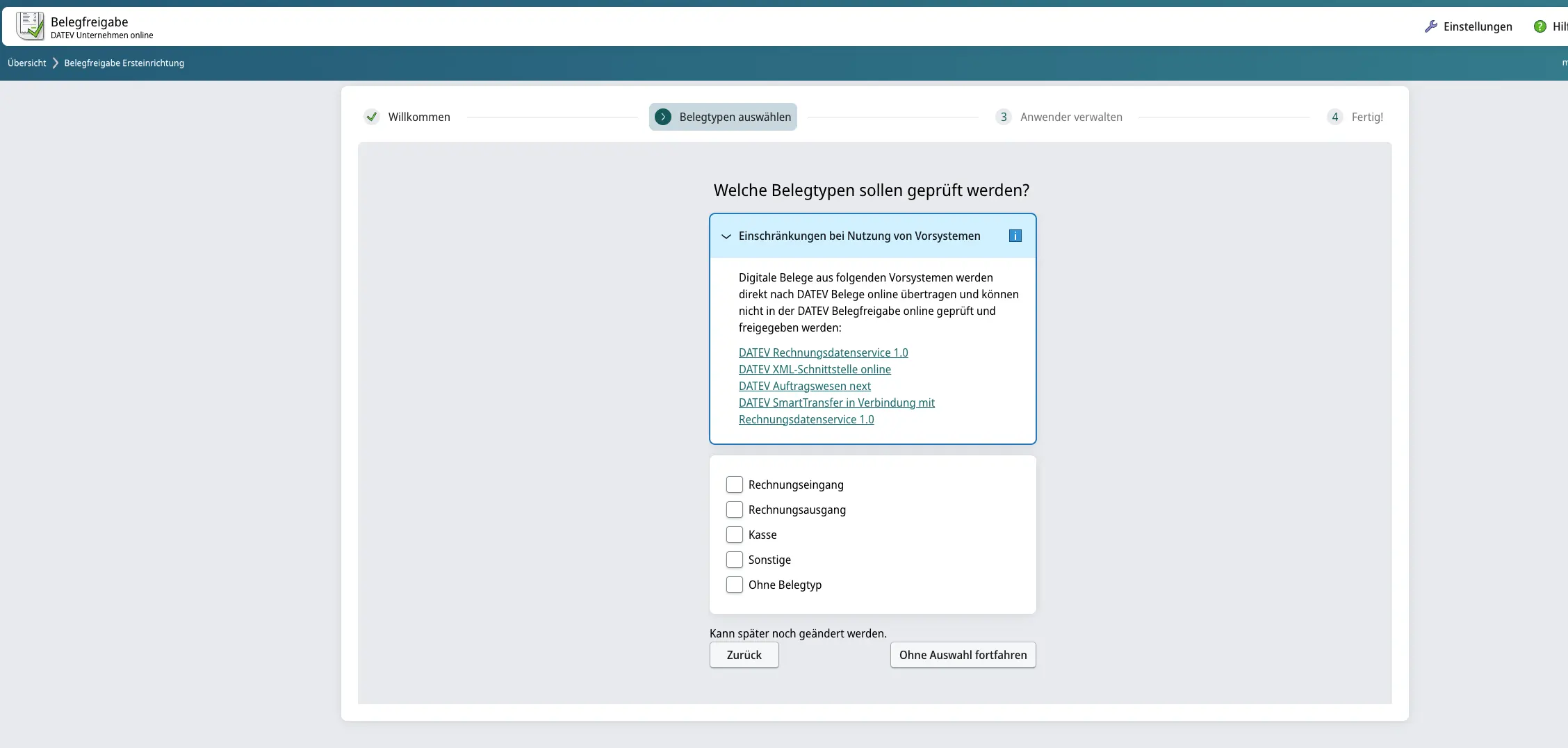
Maesn uses DATEV Rechnungsdatenservice 1.0 to bypass DATEV Belegfreigabe Online
The Maesn Unified API acts as an abstraction layer on top of the DATEV Online APIs (and additional services). All relevant XML, CSV, and DATEV-specific formats are covered by our API and unified within a common data model that applies across all systems supported by Maesn. You can find more information about the different services and how we use them to provide a smooth and seamless developer experience here.
One unified Integration flow for all systems - even with DATEV Belegfreigabe
For engineering teams, this approach simplifies the integration significantly. Applications can rely on a deterministic API flow: documents and booking proposals are transferred, processed, and available in DATEV without waiting for manual approval steps.
There is no need to implement approval logic, handle intermediate states, or adapt behavior based on customer-specific Belegfreigabe configurations. The API contract remains stable and predictable across customers.
Accounting and finance teams retain full flexibility
Automated documents arrive without additional effort, while manual documents can still be reviewed and approved using Belegfreigabe online. This preserves internal control processes where they are needed, without blocking automation where they are not.
The result is a clear separation between automated system integrations and manual accounting workflows, both operating side by side within DATEV.
Bypassing DATEV Belegfreigabe enables scalable, real-world integrations
The ability to bypass DATEV Belegfreigabe for pre-approved invoices is essential for:
- AR/AP automation platforms
- Expense management tools
- Billing systems
- High-volume transaction use cases
Rather than enforcing a single workflow, Maesn adapts to existing DATEV setups and approval models, making automation scalable without compromising flexibility.
Ready to Start?
Check our DATEV API Docs!
Summary: Bypass DATEV Belegfreigabe without losing approval control
With Maesn-based DATEV integrations:
- Pre-approved invoices can bypass DATEV Belegfreigabe Online and DATEV Belegfreigabe Online Comfort
- Manual approval workflows remain fully intact
- Automation and control operate side by side
This approach eliminates unnecessary friction in automated accounting processes, without changing how accountants work where manual review is still required.
About the author
Themo is CEO and Co-Founder of Maesn. With years in strategy consulting — spanning requirements engineering for complex software landscapes, ERP and accounting software selections, and end-to-end integration projects — he holds a Dr.-Ing. with a focus on ERP-to-SaaS transformation. He co-founded Maesn to make system integration effortless.

Co-Founder