
Key Takeaways
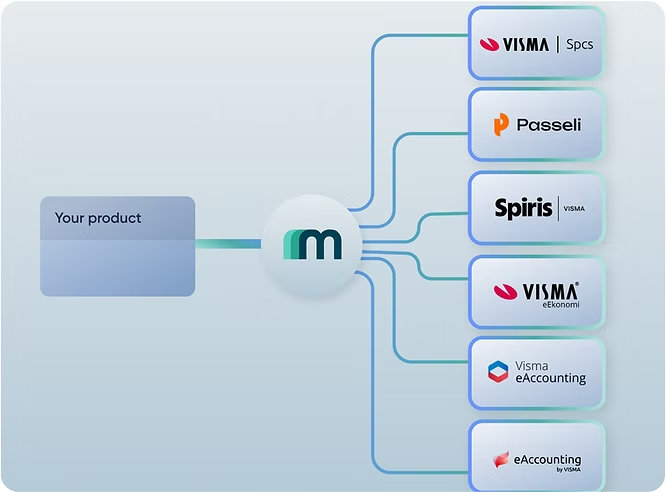
- Spiris and Visma eAccounting share the same API — the product was called Visma eEkonomi in Sweden until 2025, when Visma Spcs rebranded to Spiris. The API and all endpoints are unchanged.
- Swedish companies use the BAS chart of accounts. Account numbers follow BAS conventions and differ structurally from Dutch or Norwegian account setups — VAT accounts, revenue accounts, and cost accounts all follow the BAS numbering scheme.
- Swedish VAT is called Moms and has three rates: 25%, 12%, and 6%. These map to specific VatCodes in the API. Moms is an EU-compliant VAT system with its own reporting obligations to Skatteverket.
- ROT and RUT deductions are a Swedish-specific invoice feature. Swedish consumers can claim tax deductions on household services (RUT) and repair/conversion work (ROT). Invoices involving these deductions have additional fields and logic not present in other markets.
- The Organisationsnummer is Sweden's primary company identifier. It appears on invoices, is required for VAT registration, and should be treated as the canonical identifier when matching or creating customers in the API.
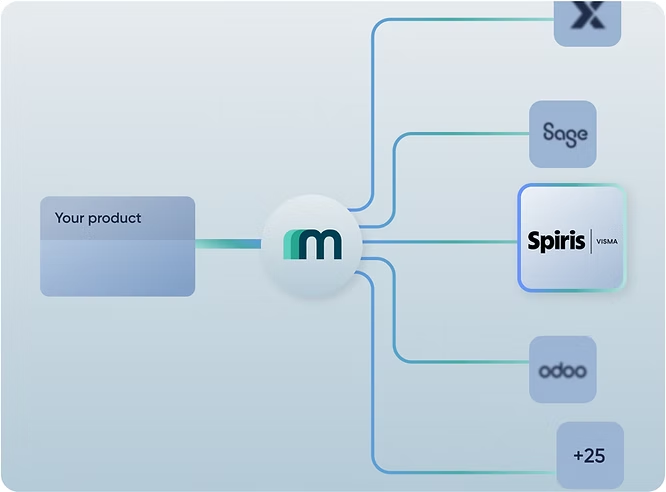
- Maesn handles all of the above. One unified API — Swedish BAS mapping, Moms VAT logic, and ROT/RUT field handling are abstracted so your code stays system and country-agnostic.
Spiris Is the New Name for Visma Spcs — the API Is Unchanged
In 2025, Visma Spcs rebranded to Spiris, and the Swedish product name changed from Visma eEkonomi to Bokföring & Fakturering (or Bookkeeping & Invoicing in English).
For developers searching for integration documentation, this means: "Visma eEkonomi API", "Visma Spcs API", "Spiris API", and "Bokföring & Fakturering API" all refer to the same integration target at developer.vismaonline.com. The developer portal itself is now branded as Spiris.
Maesn covers Visma Spiris as part of its unified eAccounting integration
You do not need to handle the naming history or route differently based on whether a Swedish customer refers to their software as eEkonomi, Spiris, or Bokföring & Fakturering.
Swedish BAS Chart of Accounts — Account Numbers Follow a Structured National Standard
Swedish companies typically work with the BAS chart of accounts (BAS-kontoplanen), the national standard for Swedish accounting maintained by the BAS Group. BAS defines a structured numbering scheme for all account types: assets, liabilities, equity, revenue, costs, and VAT-related accounts. The numbering follows a logical hierarchy where the first digit identifies the account class.
When creating invoices, bookkeeping entries, or syncing products in the Spiris API, the account references you provide must match accounts that exist in the tenant's specific chart of accounts. While most Swedish SMEs use BAS as their base, individual account configurations vary: accounts can be renamed, added, or removed per tenant. For VAT accounts specifically, Swedish Moms uses dedicated account ranges within BAS.
Configuration layer handles account mapping for Swedish tenants during onboarding
Via Maesn, you fetch and assign accounts directly from your customers' chart of accounts. Through a mapping configured during integration setup, these accounts are then used in all subsequent API operations — no BAS knowledge required in your codebase.
Swedish Moms Has Three VAT Rates — and Maps Differently Than Norwegian or Dutch VAT
Swedish VAT — called Moms (short for Mervärdesskatt) — is an EU-compliant VAT system administered by Skatteverket, the Swedish Tax Agency. It has three rates:
In the Spiris API, each rate maps to specific VatCodes configured in the tenant's account. Unlike a simple percentage field, VatCodes carry accounting logic: they reference the debit and credit accounts to use when the VAT is applied. This means you cannot simply pass a VAT rate as a number — you must reference the correct VatCode for the tenant and transaction type.
Configuration layer handles Moms VAT mapping for Swedish tenants during onboarding
Via Maesn, you fetch and assign VatCodes directly from your customers' account. Through a mapping configured during integration setup, these VatCodes are then used in all subsequent API operations — no Moms logic required in your codebase.
ROT and RUT Deductions Are a Swedish-Specific Invoice Feature With Dedicated API Fields
One feature completely unique to the Swedish market is ROT and RUT deductions — tax deductions Swedish consumers can claim on specific types of work performed at their home:
- ROT (Reparation, Ombyggnad, Tillbyggnad) — deduction for repair, conversion, and construction work on property
- RUT (Rengöring, Underhåll, Tvätt) — deduction for household cleaning, childcare, and similar services
For software products serving Swedish service businesses — cleaning companies, contractors, craftsmen — ROT and RUT are often a core part of their invoicing workflow. In the Spiris API, invoices involving ROT or RUT have additional fields on the invoice lines: the type of deduction, the property reference, and the deduction amount. These fields are Sweden-only and have no equivalent in the Norwegian or Dutch eAccounting API responses.
If your product creates or processes invoices for Swedish customers in ROT/RUT-eligible sectors, your integration must handle these fields explicitly. Ignoring them means your product cannot serve a significant portion of the Swedish SME market.
Maesn supports the Swedish-specific invoice fields including ROT and RUT
If you have specific requirements around ROT/RUT invoice handling for your use case, reach out to the Maesn team to discuss implementation.
Spiris Partner Programme: App Registration and the Swedish Market
To integrate with the Spiris / Bokföring & Fakturering API, you register in the Visma Developer Portal (developer.vismaonline.com) under the Spiris Partner Programme. This gives you your client_id, client_secret, access to sandbox environments, and a listing path in the Spiris integration marketplace — where Swedish SMEs and accounting firms discover third-party products.
The Swedish market has a strong accounting bureau culture: many SMEs work with an accounting firm (redovisningsbyrå) that manages their bookkeeping on their behalf.
How Maesn supports this: Maesn helps you navigate the Spiris Partner Programme and supports you throughout the process. If you have questions before starting, reach out to the Maesn team early. If you are already a Maesn customer, speak directly with your dedicated contact.
Why Teams Use Maesn for Visma Spiris API Integration
Building a direct integration with Spiris means handling Swedish BAS account mapping, three-tier Moms VAT logic, ROT/RUT invoice fields and the standard eAccounting API challenges — OAuth scopes, 60-minute token expiry, and pagination — all at the same time.
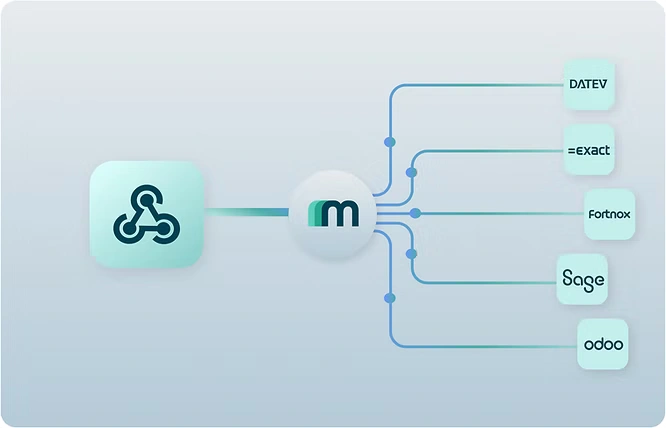
Maesn abstracts this entire surface into a single unified API. You integrate once to Maesn and your product automatically works with Spiris and every other accounting system in the Maesn portfolio, without market-specific branches in your code.
Check the Maesn documentation for Spiris / Visma eAccounting or talk to the Maesn team to get started.
Ready to Start?
Check Visma Spiris (= Visma eAccounting API) in the Docs!
About the author
Themo is CEO and Co-Founder of Maesn. With years in strategy consulting — spanning requirements engineering for complex software landscapes, ERP and accounting software selections, and end-to-end integration projects — he holds a Dr.-Ing. with a focus on ERP-to-SaaS transformation. He co-founded Maesn to make system integration effortless.

Co-Founder
.webp)