


Key Takeaways
- AI agents require live, real-time data access, not historical snapshots from data lakes.
- Data lakes break fine-grained permissions, making compliant access control nearly impossible to rebuild.
- Financial data in lakes loses semantic context, relationships, and process logic from the source system.
- Two-thirds of enterprise AI projects stay in pilot due to compliance, governance, and security concerns.
- Maesn provides unified APIs that deliver real-time, normalized financial data while preserving permissions, compliance, and auditability by design.
Why Agentic AI Needs Live, Compliant Data Access
Unlike analytics or BI, which thrive on historical snapshots, AI agents work in real time.
These scenarios require fresh, contextual data – not yesterday’s exports.
More importantly, they require data to be accessed under the same access controls and governance rules that apply in the original systems.
This is where most enterprises hesitate: how can AI agents be trusted to handle sensitive data – especially financial data – without violating compliance or exposing information?
The Limits of Data Lakes for AI Agents
Data lakes promised a “single source of truth.” For AI agents, however, they create more problems than they solve:
1. Permissions Break Down
In source systems, access is tightly controlled through authentication, roles, and permissions. Once data is copied into a lake, that context is lost. Rebuilding fine-grained access control on a central repository is nearly impossible – one misconfiguration can expose entire datasets.
With Maesn, queries run directly against the source system, always under the correct user credentials. Permissions remain intact by design.
2. Compliance Becomes Fragile
Financial and personal data comes with strict legal requirements (GDPR, SOX, local data sovereignty rules). In a data lake, lineage and auditability become difficult. Ensuring the “right to be forgotten” or proving controlled access is extremely complex.
With Maesn, compliance is enforced at the API layer: every access is authenticated, authorized, logged, and auditable.
3. Semantics and Context Get Lost
Data exported into a lake loses much of its meaning. Relationships, constraints, and process logic that exist in the original system vanish. Enterprises then spend months creating data mappings and normalization rules – and still risk inconsistencies.
Maesn provides normalized, semantic endpoints out of the box. Agents consume clean, unified data models (/customers, /invoices, /transactions) regardless of source system.
4. Data Staleness vs. Real-Time Needs
Data lakes typically rely on batch pipelines. For an AI agent, working with stale data is a dealbreaker – especially in financial operations.
With Maesn, agents access live data directly from source systems. No lag, no outdated snapshots.
5. Cost and Complexity
Building and maintaining a data lake is a major engineering effort. ETL pipelines, governance layers, consultants – costs spiral quickly, while ROI for AI remains elusive.
With Maesn, there is no duplication. Data stays in place, complexity is reduced, and the enterprise stack stays clean and maintainable.
Why Many AI Projects Remain Stuck in Pilot
Surveys show that two-thirds of enterprises keep their AI initiatives in testing, citing compliance, governance, and security as the biggest blockers. And rightly so: an AI agent with uncontrolled access to sensitive financial data could breach regulations or trust in seconds.
The lesson is simple: without a compliant, secure, and auditable way to provision data, agentic AI cannot move from lab to production.
Maesn’s Solution: Unified APIs for Financial Integrations
At Maesn, we built our integration layer to solve exactly this.
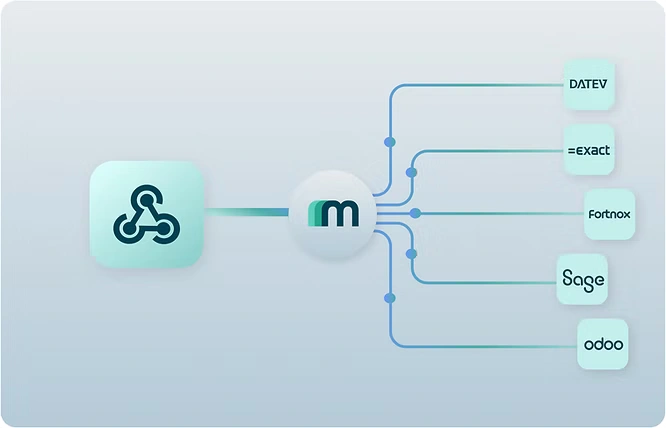
- Unified APIs with MCP Server: Expose multiple financial systems through normalized endpoints. Agents query /invoices, /accounts, or /transactions once, and Maesn handles the differences between SAP, Datev, Sage, or Xero.
- Preserved Permissions: Each query is executed with the correct system credentials. If a user only has access to certain records in the ERP, the same restriction applies via Maesn.
- Compliance by Design: Every request is logged, authenticated, and kept under governance.
- Real-Time Data, Not Snapshots: Agents get up-to-date information directly from source systems, enabling accurate, compliant decisions.
In short: Maesn makes financial data safely accessible for AI and agentic applications – without building another risky data silo.
Bottom Line
Data lakes still play a role in analytics and reporting. But for AI agents in enterprise environments, they are the wrong tool. The only viable path is Unified APIs that deliver a normalized, semantic data model while preserving access control, compliance, and security requirements.
That’s what Maesn provides today – starting with financial integrations, the most sensitive and business-critical data domain.
With Maesn, enterprises can finally move AI agents beyond the test phase and into production – securely, compliantly, and with full confidence.
Skip the detours. Provision your AI data the right way – with Maesn.
About the author
Themo is CEO and Co-Founder of Maesn. With years in strategy consulting — spanning requirements engineering for complex software landscapes, ERP and accounting software selections, and end-to-end integration projects — he holds a Dr.-Ing. with a focus on ERP-to-SaaS transformation. He co-founded Maesn to make system integration effortless.

Co-Founder
.webp)