
Key Takeaways of Integrating weclapp API
- weclapp is a German cloud-based ERP widely used by SMBs in the DACH region, especially in eCommerce and service-oriented businesses
- The weclapp API is REST-based, using JSON for real-time integrations and CSV, XML, or EDI for bulk import and export scenarios
- Every API request requires a manually extracted instance ID, adding complexity and risk in scalable or multi-tenant integrations
- Authentication relies on user-specific API keys, which must be generated and managed manually within the weclapp account
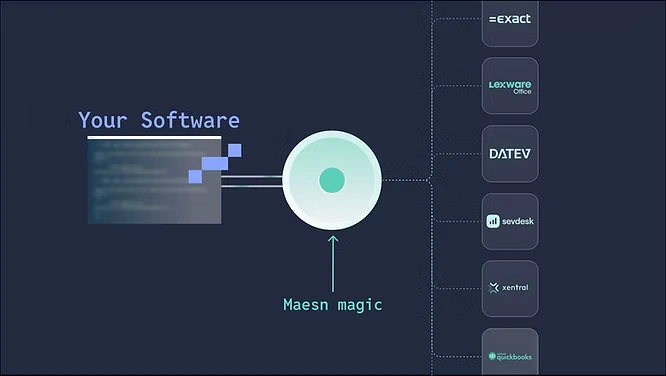
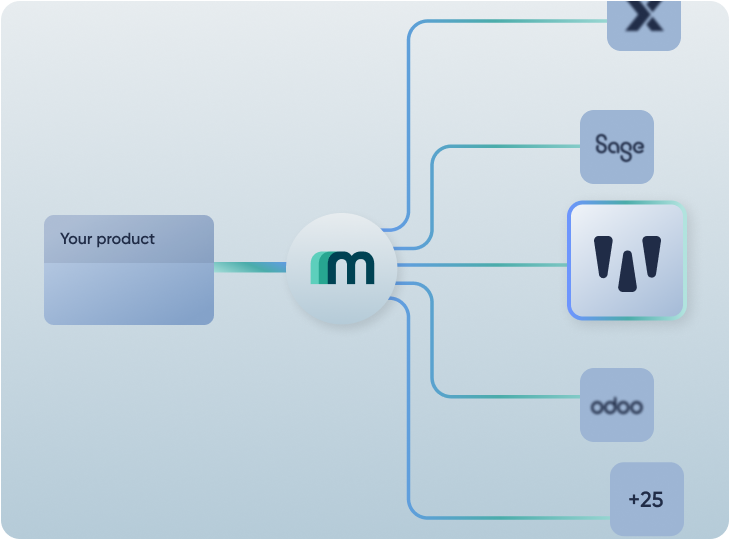
- Maesn abstracts weclapp’s technical complexity, providing a sandbox, normalized data models, and a single unified API for reliable ERP integrations
weclapp is a cloud-based ERP system from Germany with strong coverage in eCommerce
Weclapp is a cloud-based ERP system from Germany, founded in 2008 and widely used by small and mid-sized businesses (SMBs) across the DACH region. The platform combines CRM, inventory management, project management, invoicing, and accounting into a single, modular solution designed for fast-growing companies.
In 2022, weclapp was acquired by Exact, one of Europe’s leading ERP vendors. With this acquisition, Exact strengthened its footprint in the German-speaking market and positioned weclapp as a modern, cloud-first ERP for the mid-market segment. Today, weclapp competes with systems such as Xentral, Odoo, Sage, and Microsoft Dynamics 365 Business Central. From a functional perspective, weclapp is powerful and flexible.
From a developer perspective, its API comes with several structural and conceptual challenges that teams need to understand before building production-grade integrations.
weclapp Provides a REST API with File-Based Formats for Bulk Import and Export
The weclapp API is primarily designed as a REST-based interface that enables integrations with external systems such as third-party tools, e-commerce platforms, and automation frameworks. It follows common REST patterns and uses JSON as the standard format for requests and responses, making it accessible for most developers. In addition to real-time API communication, weclapp supports file-based data exchange formats such as CSV, XML, and EDI for bulk imports and exports. These file formats are typically used for large data transfers, initial migrations, or batch-based synchronization scenarios where direct API calls are not practical.
weclapp Instance ID Is Required for Every API Call and Must Be Extracted from the Account URL
When working with the weclapp API, every single request requires an instance ID that uniquely identifies the weclapp account. This instance ID is not returned automatically during authentication and must instead be manually extracted from the URL of the weclapp account in the browser. Developers then need to include this ID explicitly in all API calls, which adds unnecessary complexity, increases the risk of configuration errors, and makes integrations harder to maintain - especially in multi-tenant or scalable setups.
With Maesn, the instance ID only needs to be provided once during authentication where it is requested in the auth flow. Maesn securely stores the ID and automatically reuses it for all subsequent requests, allowing developers to interact with weclapp without handling instance-specific parameters in their request logic.
Ready to Start?
Check our weclapp API Docs!
weclapp API Key Is Generated Manually in the User Account
The weclapp API is authenticated using a user-specific API key. To obtain this API key, users must manually generate it within their weclapp account settings. The key is created under the user profile and is tied to the permissions of that specific user, meaning access rights are directly inherited from the user configuration in weclapp.
weclapp Does Not Offer a Dedicated Sandbox and Relies on Trial or Partner Test Accounts
weclapp does not provide a publicly available, dedicated sandbox environment specifically designed for API development and testing. Instead, developers typically work with a separate free trial account that is isolated from production data and can be used to test API integrations safely. For more advanced or long-term integration projects, technology and implementation partners can receive access to a partner-provided demo or test instance as part of the official weclapp partner program. In practice, this means that development, testing, and staging environments must be managed manually by using distinct weclapp accounts, rather than switching between predefined sandbox and production endpoints.
Maesn offers a sandbox environment that allows developers to test and validate weclapp integrations without relying on trial accounts or partner demo instances. This enables faster development, safer testing, and a more predictable integration workflow.
weclapp Offers a Partner Program and Add-On Ecosystem
weclapp provides a structured partner program that serves as the primary entry point for technology providers, system integrators, and consultants who want to build integrations or extensions around the platform. Rather than offering a fully open app marketplace, weclapp maintains a curated add-on ecosystem where integrations and extensions are typically made available through approved partners. Access to partner resources, demo instances, technical documentation, and co-marketing opportunities is granted through this formal onboarding process, making the partner program the main path for gaining visibility and distribution within the weclapp ecosystem.
Maesn supports teams throughout this manual partner process and enables a smooth, structured integration journey with weclapp - from initial setup to production-ready deployments.
weclapp API Integration and All Other Relevant Financial Systems - via Maesn Unified API
Integrating with weclapp ERP offers powerful capabilities to your product - but as described, it also comes with a few things to consider when integrating directly to weclapp.
That’s where Maesn changes the game. We provide ready-to-use REST API, clean documentation, normalized data model and much more - so you can focus on your product and deliver additional value to your users instead of building infrastructure. Maesn acts as the abstraction layer on top of weclapp (and all the other Financial/ERP systems your customers request), smoothing over the differences and peculiarities so you can focus on developing your own solution! With one integration to Maesn, you can build a more streamlined and resilient integration without reinventing the wheel for each provider. As APIs continue to evolve, we ensure you remain insulated from changes or odd behaviors in any single API.
Explore all available integrations in our integrations overview.
About the author
Themo is CEO and Co-Founder of Maesn. With years in strategy consulting — spanning requirements engineering for complex software landscapes, ERP and accounting software selections, and end-to-end integration projects — he holds a Dr.-Ing. with a focus on ERP-to-SaaS transformation. He co-founded Maesn to make system integration effortless.

Co-Founder
.webp)