Key Takeaways
- The DATEV E-Rechnungsplattform enables compliant e-invoicing within the DATEV ecosystem and supports invoice transmission via the PEPPOL network.
- Incoming invoices remain fully inside the DATEV environment, especially through DATEV Unternehmen Online and DATEV Rechnungswesen.
- The platform is not designed for companies running independent, full in-house ERP accounting systems.
- For software vendors, integration is relevant if you create outgoing invoices for customers using DATEV and do not offer your own PEPPOL integration.
- Maesn will be among the first to enable automated integrations once official APIs are released.
Short Recap: What Is PEPPOL and How Does It Work?
PEPPOL is an international network that enables businesses and public institutions to exchange electronic invoices and other documents in a standardized and secure way. It was originally launched as part of an EU initiative to support cross-border digital procurement and is now widely used for compliant e-invoicing across Europe.
At its core, PEPPOL defines common document formats and communication protocols. This allows companies to exchange invoices electronically, helping to automate processes, reduce errors, and improve efficiency.
PEPPOL operates through the 4-corner model: invoices are not sent directly between sender and recipient, but via two certified PEPPOL Access Points. This ensures secure, interoperable, and compliant document exchange without requiring direct system integrations between businesses.
What’s the Role of the DATEV E-Rechnungsplattform in the Context of PEPPOL and Where Does It Sit in the Software Landscape?
The DATEV E-Rechnungsplattform enables companies to exchange electronic invoices with their business partners in a compliant and structured way. In the context of PEPPOL, it acts as the technical bridge that allows invoices to be sent and received via the PEPPOL network while remaining fully embedded in the DATEV ecosystem.
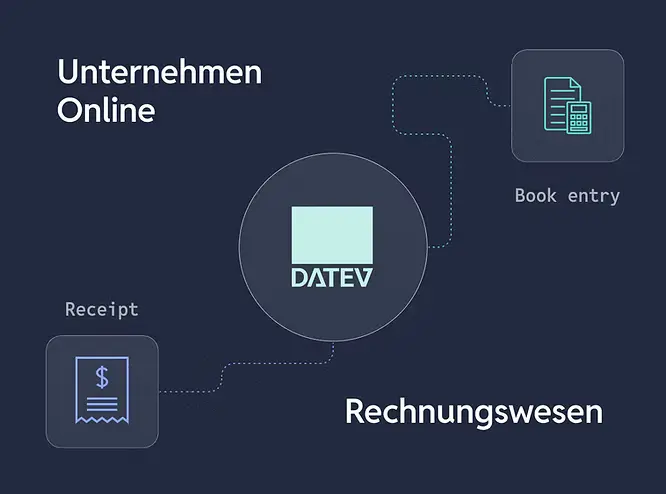
The platform is not a standalone ERP system, but an extension within the DATEV landscape — especially integrated with DATEV Unternehmen Online (Read more about DATEV systems). It connects invoicing workflows with accounting processes and ensures that invoice data can be securely transmitted, received, and processed within existing DATEV environments.
Purpose of the DATEV E-Rechnungsplattform (Source: DATEV)
Not Designed for Non-DATEV or Full In-House ERP Environments
The DATEV E-Rechnungsplattform is not intended for companies that manage their bookkeeping outside the DATEV environment. It is also not designed for businesses using full ERP systems where accounting, reconciliation, and financial management are handled entirely in-house.
In such cases, companies typically rely on their ERP’s native e-invoicing capabilities or dedicated PEPPOL integrations rather than using the DATEV E-Rechnungsplattform.
The Process for Incoming Invoices (Bills)
When a supplier sends an electronic bill via the PEPPOL network, the DATEV E-Rechnungsplattform receives and processes the document within the DATEV ecosystem.
The process typically follows these steps:
- The supplier sends the invoice via the PEPPOL network.
- The DATEV E-Rechnungsplattform receives the bill through its integrated e-invoicing inbox (E-Rechnungs-Postfach).
- The invoice is automatically transferred to DATEV Unternehmen Online, DATEV’s cloud-based data exchange platform.
- Within DATEV Unternehmen Online, users can:
- review and approve the invoice (via DATEV Belegfreigabe Online)
- initiate the payment process (via integrated payment services).
- The structured invoice data is transferred to DATEV Rechnungswesen, where accounting and reconciliation take place. Either internally within the company or externally by the tax advisor.
The Process for Outgoing Invoices
When a company sends an electronic invoice, the DATEV E-Rechnungsplattform acts as the transmission layer between the invoicing system and the recipient via PEPPOL or other supported networks.
The process typically follows these steps:
- The invoice is created in the invoicing software. This can be a third-party solution or DATEV Auftragswesen next.
- The invoice is transferred to the DATEV E-Rechnungsplattform and sent to the recipient via PEPPOL.
- At the same time, the DATEV E-Rechnungsplattform forwards the invoice to DATEV Unternehmen Online.
- DATEV Unternehmen Online makes the invoice data available to DATEV Rechnungswesen, where the actual bookkeeping and reconciliation take place. Again either internally or via the company’s tax advisor.
You Are a Software Vendor: Is an Integration to the DATEV E-Rechnungsplattform Relevant for You?
As explained above, the DATEV E-Rechnungsplattform is deeply embedded in the DATEV ecosystem. Especially in the incoming invoice (bill) process, documents remain entirely within the DATEV environment. This means that for many use cases, external systems are not directly involved.
An integration to the DATEV E-Rechnungsplattform is mainly relevant for you as a software vendor if the following conditions apply:
- Your software creates outgoing invoices that need to be sent in a compliant electronic format.
- You are not responsible for handling incoming bills, as this process is typically managed fully inside the DATEV environment.
- Your customers use the DATEV ecosystem for accounting inhouse or collaboration with their tax advisor.
- You do not offer your own PEPPOL or Traffiqx integration, and therefore need DATEV as the transmission layer for compliant invoice delivery.
If these points apply to your solution, integrating with the DATEV E-Rechnungsplattform can help ensure seamless invoice transmission while keeping your customers fully connected to their existing DATEV workflows.
Maesn Will Be Among the First to Support the DATEV E-Rechnungsplattform
Maesn is part of a small, exclusive group closely aligned with DATEV regarding future integration capabilities of the DATEV E-Rechnungsplattform.
Currently, there is no public API available, and the platform mainly supports manual import and export processes. This means that a fully automated API-based integration is not yet technically possible — neither for Maesn nor for any other integration provider.
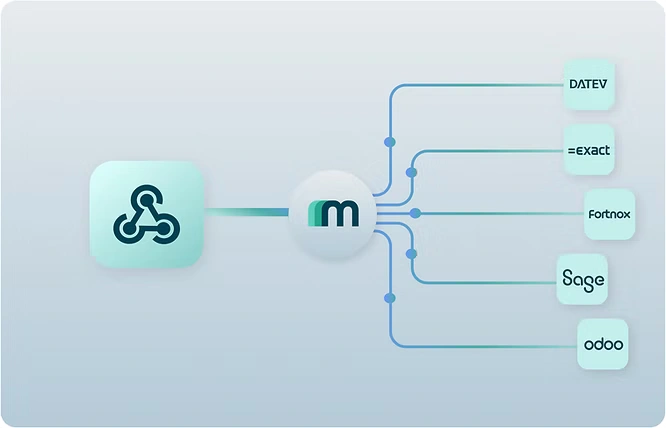
As soon as official APIs are released, Maesn will be among the first to support the DATEV E-Rechnungsplattform with a scalable, automated integration — enabling software vendors to seamlessly connect their invoicing solutions to the DATEV ecosystem and PEPPOL workflows.
About the author
Marius is CSO and Co-Founder of Maesn. With years in enterprise software — spanning product management, data pipelines, API integrations, and cross-functional development teams at one of Germany's largest software companies — he brings a mix of technical depth and commercial instinct. He co-founded Maesn to make system integration a strategic advantage for modern software teams.

CRO